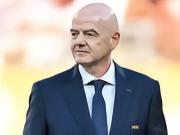
On August 4, according to TA, after FIFA's plan to sell commercial rights suffered a major setback and sparked fierce opposition within the organization, FIFA President Gianni Infantino urgently convened a crisis meeting with FIFA's senior management in Morocco on Wednesday.
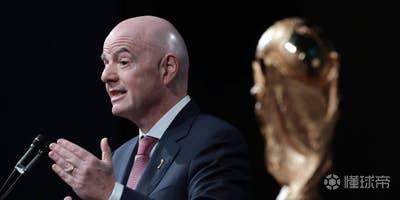
The meeting was held against the backdrop of the complete failure of Gianni Infantino's "FIFA Forward Enterprise (FFE)" plan. Due to strong opposition from the global football community and within FIFA itself, Infantino was forced to withdraw the proposal last week, and this crisis is now threatening his presidency.
The core of the FFE plan, as understood, is to allow private capital to purchase shares in FIFA's commercial operations and tournament business. In other words, FIFA originally hoped to raise funds for the commercial development of core events like the World Cup by introducing external investors. However, this idea sparked huge controversy globally as soon as it was revealed, with many arguing that it would subject core football assets like the World Cup to capital control and undermine FIFA's independence as the global governing body for football.
FIFA Secretary General publicly expressed his opposition.
On Monday local time, criticism of the FFE plan escalated further.
FIFA Secretary General Mattias Grafstrom has joined FIFA Chief Operating Officer Kevin Lamour in publicly expressing his opposition to the plan.
According to an internal email obtained by The Athletic, Grafström sent an open letter to all employees on Monday morning. In the letter, he revealed that he was previously unaware that Infantino had proposed the FFE plan.
Grafström wrote: "Individuals come and go, periods of instability will eventually pass, and unfortunate events are just a fragment of history."
He also described the incident as "a series of regrettable and reprehensible events."
Although Grafström did not directly name Infantino in his letter, it is widely believed that the letter actually expressed FIFA's management's strong dissatisfaction with the way the FFE plan was being implemented.
Chief Operating Officer: Employees were deceived
In fact, before Grafström, FIFA Chief Operating Officer Kevin Lamour had already publicly expressed his doubts.
In an interview with the Associated Press last Friday, Lamour said that FIFA staff were “deceived” throughout the process.
He said, "FFE is just a one-man project."
Although Lamour did not directly mention Infantino's name, nor did he publicly criticize the 56-year-old FIFA president, it is almost universally believed that the "person" he was referring to was Infantino himself.
This statement further exacerbated the rifts within FIFA and led to questions about whether Infantino bypassed normal governance procedures in making major decisions.
Wenger: I learned about this plan through the media.
In addition to the Secretary General and Chief Operating Officer, FIFA's Director of Global Football Development, Arsène Wenger, also issued a statement on Monday responding to the incident.
Wenger emphasized that he was not involved in the development of the FFE plan.
He said, "I think it's necessary to make some explanations regarding the recent series of events at FIFA."
Wenger stated, "I was not involved in this strategic plan, and I only learned about the project for the first time through media reports."
He also stated that FIFA's withdrawal of the plan was an "absolutely necessary and unquestionable decision."
Wenger further stated: "I firmly believe that FIFA must remain independent and serve the sport of football with dedication, transparency and integrity."
It is worth noting that this statement was officially released by FIFA, which means that more and more important managers within FIFA are beginning to publicly distance themselves from the FFE program.
The president of the Jordanian Football Federation denounced FIFA for "extortion."
As internal pressures within FIFA continue to rise, external criticism is also becoming increasingly fierce.
Jordanian Football Federation President Prince Ali bin Al Hussein, who previously ran for FIFA presidency, released a strongly worded statement on social media that day.
He directly accused FIFA of "blackmail" activities.
Prince Ali wrote: "Jordan has always prided itself on upholding moral values."
He continued, "We did not support Infantino in the past, and we certainly will not support him now."
He then went on to say, "The whole incident is essentially a form of extortion, and we refuse to give in."
This statement undoubtedly further intensified the international public opinion pressure facing FIFA.
UEFA demands Infantino's resignation
Currently, the greatest political pressure on Infantino comes from Europe.
UEFA has publicly stated that it has lost confidence in Gianni Infantino's leadership and has demanded his resignation as FIFA president. UEFA believes that the recent controversies surrounding FIFA's governance structure and the FFE (Free Foreign Football) plan have seriously damaged FIFA's credibility as the global governing body for football.
It is understood that there was strong dissatisfaction within UEFA regarding Gianni Infantino's plan to sell FIFA's commercial interests. Some in European football believe that such a significant strategic decision, proposed without sufficient communication and transparency, has raised concerns about FIFA's governance. With the plan ultimately forced to be withdrawn, distrust of Infantino's leadership style in Europe has further intensified.
UEFA has long been an important partner of FIFA, but in recent years, the two sides have seen their differences widen on a number of major issues. From competition reform and commercial development to FIFA's internal management methods, disagreements have repeatedly arisen between European football governing bodies and FIFA under Gianni Infantino's leadership.
Meanwhile, according to The Athletic, the Football Association (FA) is also preparing to follow the example of the Football Association of Wales and withdraw its previous letter of support for Gianni Infantino's re-election as FIFA president next year.
It is understood that the Football Association of Wales had previously decided to withdraw its support for Gianni Infantino's continued candidacy for FIFA presidency, and the Football Association of England is currently considering similar action. If England formally withdraws its support, this would be a significant signal that major European football associations are putting further pressure on Infantino.
As one of the most influential national football associations in the world, the FA's change of attitude could have a greater demonstration effect. Previously, while several European football associations had expressed differing opinions on some FIFA policies, they had not openly challenged Infantino's leadership. Now, however, with several European football organizations beginning to reassess their relationship with FIFA, the political pressure on Infantino is steadily increasing.
If more and more UEFA associations choose to withdraw their support, Infantino's advantage in next year's FIFA presidential election could be significantly affected. While it remains uncertain whether he will face a formal election challenge, the FFE (Free Freedom of Investment) controversy has already created clear cracks within FIFA and the global football governance system.
If England formally withdraws its support, it will mean that more and more European football associations are beginning to publicly oppose Infantino's continued leadership of FIFA.
The Asian Football Confederation (AFC) and CONCACAF have not yet requested a change of coach.
In contrast to the tough stance taken by Europe, the Asian Football Confederation (AFC) and the CONCACAF have not yet publicly demanded Infantino's resignation.
However, according to TA, both continental football federations have requested Infantino to provide an explanation as soon as possible, hoping that FIFA can give a clear explanation of the process of the FFE plan's introduction and the reasons for its eventual withdrawal. It is worth noting that CONCACAF is the same continental football federation that hosts the 2026 World Cup, therefore they are particularly concerned about FIFA's future governance direction.
With a series of public statements from top FIFA officials, continued pressure from multiple football associations, and growing calls for a change of president in European football, Gianni Infantino is facing the most serious governing crisis since taking office as FIFA president in 2016. The emergency meeting of high-level officials held in Morocco is widely seen as a crucial juncture that will determine the future direction of FIFA.