![[Special Interview] Hidetoshi Nakata x Junya Ito | "You could have been more proactive"](https://img1.qunliao.info/fastdfs8/M00/E0/1C/180x135/crop/-/rBXRn2pwTTuAez2XAAiKj-RBFX4542.jpg)
This article is reprinted and translated from Number, originally published on July 23, 2026 local time, by Nobuaki Matsumoto.
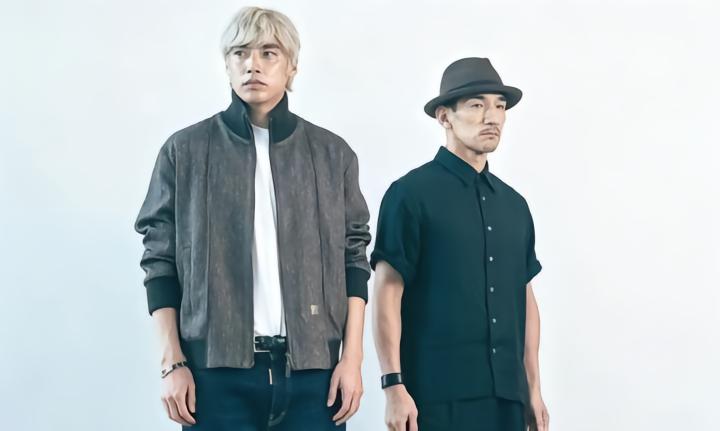
Ito: Nice to meet you.
Nakata: He's taller in person than he looks on camera.
Ito: No, it's probably because of the shoes (laughs).
—The two have one thing in common: they were both discovered by Jun Mori of Hiratsuka Hima (one of the current managers of J2 Shonan Hima), which led them to their professional careers.
Ito: Mr. Mori came to the university many times to persuade me. I spent my first year of my professional career in Kofu, so I heard a lot about Mr. Hidetoshi.
Nakata: Kofu is my hometown.
Ito: Everyone knows the anecdote that you don't like eating vegetables. Is that still the case now?
Nakata: Rather than saying I don't like to eat it, it's more accurate to say I simply can't stomach it.
Ito: I didn't eat any vegetables at all before I became a professional player. When I was in college, I kept insisting, "Even Hidetoshi Nakata doesn't eat vegetables, so I'll be fine" (laughs).
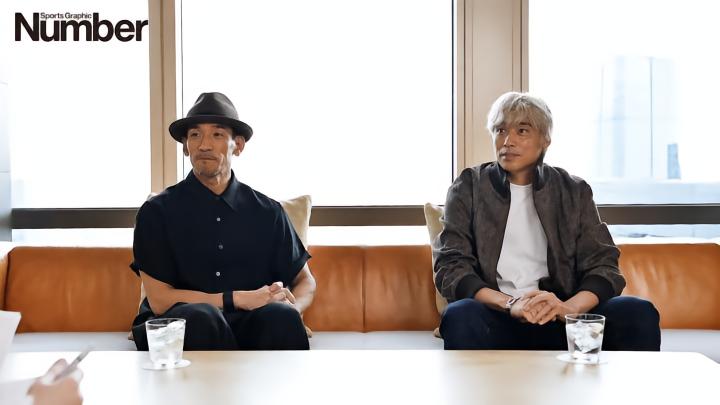
Ito: People always say my running form is strange.
—The two also have something in common: both scored goals in their World Cup matches against Tunisia. What are Mr. Nakata's thoughts on Ito's performance on the field?
Nakata: Junya doesn't look fast, but he's actually incredibly fast. Usually, speed players can give you the impression of being fast just by their running form, but Junya is completely different.
Ito: I'm often told that my running form is weird (laughs). From childhood to adulthood, my running form has never been considered good.
Nakata: Your stride looks ordinary, yet you can accelerate instantly. The contrast between your appearance and your actual speed is quite astonishing.
Ito: I'm probably stronger in terms of bursts of speed than long-distance sprints. Also, I think my speed while dribbling is my weapon.
Nakata: From a passer's perspective, having a player like Junya in the attacking third—fast and with precise timing for passes—makes the attack much smoother. However, unlike twenty years ago when I was an active player, defensive tactics are now much more sophisticated, and defenders' physical attributes have improved across the board, making through balls much harder to penetrate the defense . This World Cup is no exception; through balls delivered from the middle rarely manage to break through the defense.
Ito: That's true. When we launch a counterattack, we still have room to sprint; once the opponent sets up a defensive formation and fills the gaps, it becomes extremely difficult to break through their defense.
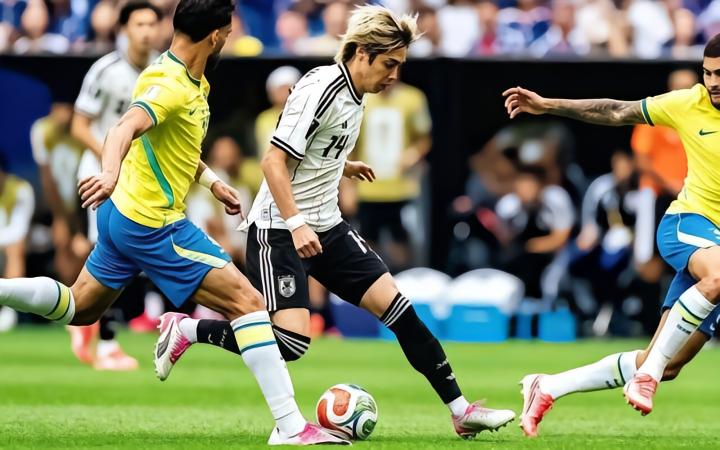
Nakata: In the match against Brazil, I hope to see Japan dare to push forward more aggressively and engage in combat from a more advanced position.
Both players had lost to Brazil in the World Cup. One scene from this tournament was particularly memorable: even when facing Brazil, the Japanese players showed no fear.
Nakata: I think it stems from changes in daily environment. People eventually adapt to their surroundings. Among our generation of Japanese national team players, very few played for European clubs, so it was inevitable to feel nervous facing Brazil. For me, many Brazilian national team players were "teammates" who had played in European leagues, and we would greet each other before the match. Now, most Japanese players compete in European leagues, and everyone probably feels the same way.
Ito: As Mr. Hidetoshi said, having many players playing in Europe gives us more confidence when facing world-class teams. Against Brazil, I didn't feel inferior. But looking back at that match, we were generally too passive and defensive. It's precisely because we weren't intimidated that I couldn't help but think: we could have competed more evenly with our opponents.
Nakata: Team tactics and team-building philosophy are another matter. In recent years, football concepts have been constantly evolving, and various countries have built mature tactical systems, with players possessing both strength and speed readily available in their squads. The gap in individual player technique and stamina is narrowing. In an environment where global football levels are gradually converging, this World Cup has a distinct characteristic: teams that dare to press high and contest in the attacking third have mostly achieved good results. Therefore, I originally hoped to see Japan push their lines even further forward against Brazil.
Ito: We were able to press high up the pitch at the start of the match, and our overall performance in the first half was quite good. Unfortunately, we couldn't maintain that rhythm at the start of the second half, and our defense dropped too far back, putting us on the back foot. Brazil was able to organize their attacks at their leisure, and the gap in strength between the two sides gradually became apparent.
Nakata: I understand that Coach Moriyasu has his own ideas, and the players also have their own thoughts. But frankly speaking from an outsider's perspective: I expect the team to show this attitude—even if they might lose 0-3, they should approach the game with the mindset of striving for a 3-0 victory. Brazil has won the World Cup five times and has a rich historical foundation; the world generally accepts that "Brazil is very strong." Therefore, they naturally adopt a strong stance, actively pressing and winning the ball, which has become their inherent playing style. However, judging from Japan's performance in the first half of this match and Brazil's performance in other matches, I think Brazil doesn't like opponents constantly pressing forward. Unlike the era when the gap in strength between the two sides was huge, the gap between Japan and Brazil has narrowed now, and they should adopt a more proactive approach . I'd like to ask you about your actual feelings while on the field: Was the second-half defensive tightening a pre-match tactical arrangement, or was it forced by the situation of the game?
Ito: Before the match, we anticipated that Brazil would control possession. The plan was to build a low defensive formation, launch counter-attacks after winning possession, and organize attacks through smooth passing. However, by pushing the defensive line too low, as we did in the second half, the opposing center-backs gained large areas of unmarked space. We struggled to cope with their simple crosses and repeatedly suffered in aerial duels.
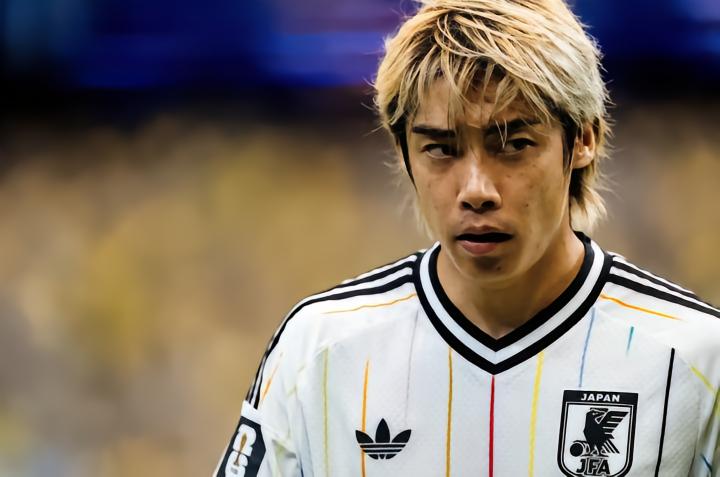
Nakata: High pressing or low-pressing defense? This debate has continued since our playing days. Thirty years ago at the Atlanta Olympics, when I was working with Coach Nishino, we discussed this issue repeatedly. Personally, I felt we had to push forward proactively. But against strong opponents, everyone hesitates, thinking, "That's true," and unconsciously retreats. Once you're in this situation, you'll be constantly pressured by the opponent, and they could seize an opportunity to score at any time.
Ito: That's absolutely true. If the opponent can easily advance to the vicinity of the Japanese penalty area and keep sending in crosses, the probability of unexpected dangerous situations will increase significantly.
Nakata: Maintaining a high defensive line means that even if we lose possession in midfield, it's not as terrible as it seems. Japanese defenders are all very fast now, so theoretically, we shouldn't be frequently exploited behind our defense. Watching other matches in this tournament reveals that simply retreating to defend makes it easy for opponents to create threats through crosses from the flanks, and even concede goals as a result.
Ito: That's true.
Nakata: It's not uncommon for opponents to take long-range shots from outside the defensive line, only to have second-balls rebounded and scored. To avoid this, the key is to prevent the opponent from easily penetrating into our penalty area. But ultimately, I think the assumption that "the opponent will definitely take possession" is problematic in itself. With the current strength of the Japanese team, they can organize their play much better from the back; as long as the defensive line pushes forward, even under pressure from the opponent, they can still complete continuous passing.
—Looking back at the attacking statistics: In the 2006 match against Brazil, Japan had 37% possession; in this tournament against Brazil, possession was only 30% (9% in the neutral zone). Twenty years later, this statistic has hardly changed.
Ito: More than possession, what struck me most was that after gaining possession, many times we could only hastily kick the ball long and lose it. We didn't have to simply clear the ball with long kicks; we could have organized and advanced from the backfield, allowing the whole team to better pass the hard-won ball around .
Nakata: The reason we are frequently forced to clear the ball long is because we are intercepting it too deep. When in danger, players instinctively think, "I need to clear the ball forward as quickly as possible." If we can win the ball back in the attacking third, we will naturally make fewer unnecessary long clearances.
Ito: It was especially obvious in the second half; our defensive line was too far back.
Nakata: In the first group stage match against the Netherlands, Japan's possession rate was also 37% (9% in the neutral zone). To be honest, given Japan's current strength, even against the Netherlands or Brazil, the possession rate shouldn't have differed so much. In a friendly match, such a stark difference in possession would never occur. It's precisely because this is the World Cup stage that we can truly understand our limits by giving our all and facing our opponents head-on. France won their first World Cup in 1998, but in 1994 they couldn't even qualify through the European qualifiers; Italy won the World Cup in 2006, but since then, they've failed to qualify three times. My takeaway is that only teams that focus on "how to win," rather than just "not losing," and learn from their defeats after giving their all, have a chance to ultimately stand atop the championship .
The still-developing "individual abilities" and the collaborative strengths that Japan excels in.
—After the defeat to Brazil, several players mentioned, "We must improve our individual abilities."
Nakata: From your perspective, is there really a huge gap in the individual abilities of the players on both sides?
Ito: Yes, the gap objectively exists. Whether one can finish at crucial moments and break through the opponent's defense largely depends on individual ability.
Nakata: What personal skills do you think you still need to improve?
Ito: I've personally experienced how the ability to carry the ball forward is crucial when the team is on the back foot. Like against Brazil, where we were constantly pressured, if I could better carry the ball forward, I could at least draw fouls from the opponent. For example, Vinicius's threat is limited when our formation is solid, but once he's given space to sprint, he's very difficult to contain. During the counter-attack, the moment he broke past Takehiro Tomiyasu and Kaishu Sano to finish with a shot, I truly felt his incredible explosiveness.
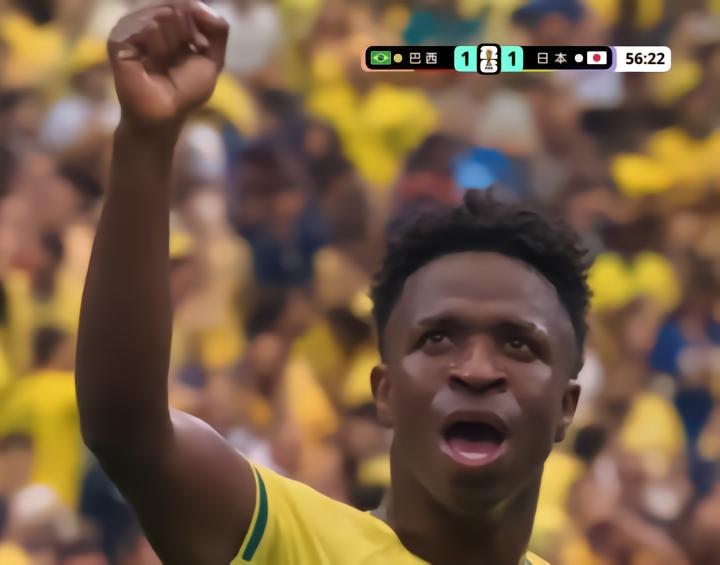
Nakata: Every era produces monstrously talented stars. But the beauty of football lies in our ability to cut off passes intended for them. The key is to prevent the ball from reaching the opponent's star player .
—Let's talk about individual physical abilities. The 2001 friendly match in France was dubbed the "Saint-Denis Tragedy," as Japanese players were completely outmatched in physical duels. Compared to that match, Japanese players are no longer at a significant disadvantage in terms of physical attributes when facing strong teams today.
Nakata: I think everyone is no longer ashamed of their physical condition, right?
Ito: That's right. I rely on my physical strength to establish myself, and I'm confident I can hold my own in speed and physical duels. This is thanks to my years of playing in European leagues. Ultimately, if you're always at a disadvantage in physical duels, you simply can't get consistent playing time at your club.
Nakata: Of course, it's important for each player to hone their individual skills. But I think it's even more crucial to refine the teamwork and coordination between players. To achieve this, one-touch passing is paramount. Even with today's highly sophisticated defensive tactics, if multiple players work together, exchanging two or three consecutive one-touch passes, even the tightest defensive formation will develop weaknesses. The current Spanish team is the best example. They don't physically overwhelm other teams, but they are meticulous about positioning down to the meter, consistently relying on linked passing to climb the defense . I believe the strength of Japanese football also lies in this kind of teamwork. In fact, Junya's goal against Tunisia was precisely an opportunity created by the coordinated passing of three players. Japan should strive to develop more of this kind of teamwork.
Ito: At that time, Ayase Ueda drew the opposing center-back forward to defend, creating space behind him, and I immediately moved forward. Actually, I wasn't sure if he could deliver a lob pass, but Ueda accurately observed the run (laughs). The reason we couldn't produce a similar attack against Brazil was ultimately because everyone in the backfield was positioned too far back during the organization phase, and there weren't enough players committing to the attack, making it difficult to create cohesion.
Nakata: Putting aside the individual abilities of the players, what problems do you think the team as a whole still needs to solve?
Ito: The opening goal against Brazil started with Kaishu's successful interception in midfield, which led to an attack. The team as a whole must create more opportunities to win back possession in the attacking third.
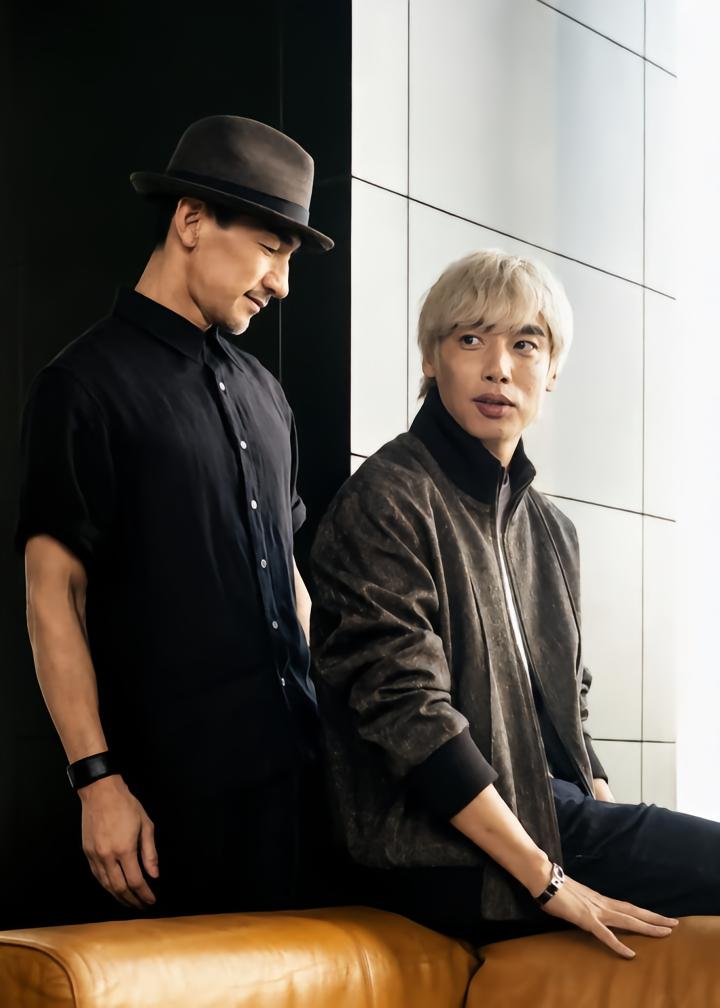
The mindset of the two players after losing to Brazil
—The team aimed for the championship but ultimately failed to advance beyond the round of 32. What were your feelings when the match in Brazil ended?
Ito: I'm filled with resentment... Rather than saying I lost to Brazil, the more direct feeling is "The World Cup has come to an end just like that," and I still want to keep fighting.
—Mr. Nakata announced his retirement after losing to Brazil in 2006. Looking back, what were his thoughts at that time?
Nakata: Actually, I had already decided to retire before that match. It's hard to describe, I felt completely exhausted.
Ito: You were only 29 years old at the time, why did you choose to end your professional career so early?
Nakata: Our era was completely different from the era in which today's players developed. When I embarked on my football journey, Japan didn't have a professional league, the national team had never reached the World Cup stage, and being a "football player" wasn't even a viable career choice. I persisted simply because of my love for football, enjoying the joy of playing on the pitch. But as times changed and the commercialization of the football industry grew, I gradually felt that my surroundings were no longer interesting. I tried transferring from Italy to England to change the situation, but the result was the same. Continuing to play could indeed earn a lot of money, but I realized that if I continued like this, my inner passion would slowly wither away, so I decided to stop . Junya, after retiring, is there anything you'd like to try?
Ito: To be honest, not at the moment. Do you have any suggestions?
Nakata: It's okay. It also took me three years to find a new goal (laughs). But now, the career I'm involved in is just as enjoyable as football.
Ito: It was my love for football that led me to a professional football career. Since becoming a professional player, I have never considered giving up. As long as the national team is willing to call me up, I am happy to give my all and continue playing. I will continue to work hard!
Character Profile
Hidetoshi Nakata
Born on January 22, 1977, in Yamanashi Prefecture. After graduating from Nirasaki High School, he joined Hiratsuka Billiards . In 1998, he joined Perugia in Serie A, and subsequently played for Roma, Parma, Bolton Wanderers, and other teams. He competed in the World Cup three times and retired after the 2006 World Cup in Germany.
Junya Ito
Born on March 9, 1993, in Kanagawa Prefecture. After graduating from Kanagawa University, he joined Ventforet Kofu in 2015; transferred to Kashiwa Reysol in 2016; played for Genk in 2019; transferred to Reims in 2022; and returned to Genk in 2026. His goal in the 2026 World Cup match against Tunisia made him the oldest Japanese goalscorer in World Cup history. He is 177cm tall and weighs 68kg.