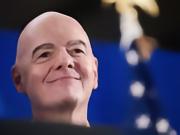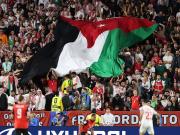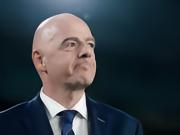
According to multiple media reports on August 3rd, Beijing time, FIFA President Gianni Infantino's position is precarious, with several football associations publicly opposing his re-election. Earlier, Andy Dunn, chief sports reporter for the Mirror, published an article criticizing Infantino's actions before and after the World Cup.
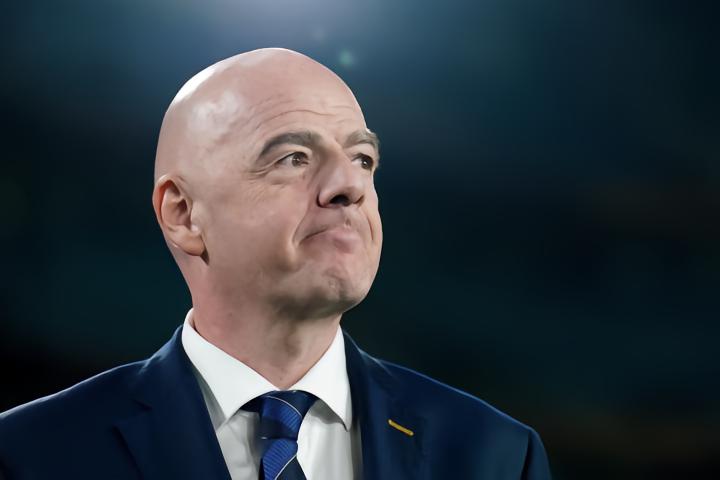
Column Article
In February 2016, when Gianni Infantino was elected FIFA president, the former president sent a congratulatory telegram. Sepp Blatter wrote: "I sincerely and warmly congratulate Gianni Infantino on his election as the new president. With his experience, professional competence, strategic vision and diplomatic skills, he possesses all the qualities to continue my work."
You're absolutely right, Sepp. He did indeed inherit the mess you left behind… and even made it worse. Fortunately, Infantino's term is finally coming to an end.
It's now impossible to imagine him staying in office; the only remaining question is how and when he will step down. The focus now shifts to who will succeed Infantino, who was widely praised when he took office ten years ago.
Then-FA chairman Greg Dyke once commented: "He is not a politician, nor is he vain. FIFA has been controlled by vain people for too long. He is the kind of person who just does his job well."
Don't worry, Greg, you're not the only one who made this kind of big mistake. The problem was that everyone in the football world at the time had the "anyone but Blatter" (ABB) mentality.
The situation may remain the same now that candidates for Infantino's successor have emerged. The current frontrunner is 60-year-old Canadian Victor Montagliani, the current president of CONCACAF.
Matthias Granström, the Swedish general secretary of FIFA, is highly respected within the organization. Salman bin Ibrahim Al Khalifa, who has served as president of the Asian Football Confederation since 2013, was the very man who narrowly lost to Gianni Infantino in the 2016 election. These potential successors all enjoy good reputations within football management circles, just as Infantino did when he took office.
Let's not forget that until Infantino unveiled that unbelievable World Cup "fire sale" deal, he enjoyed overwhelming support from member associations. This undoubtedly raises the question: should FIFA be run by an autocratic football administrator? The answer is clearly no.
One of the few positive initiatives Gianni Infantino has taken is promoting the FIFA Legends program. Most of the time, you might think he's just doing it so he can play alongside famous retired players and watch games together from the stands, but regardless, seeing legends of the sport involved in its promotion is always a good thing.
Over the years, football legends have also been involved in management – with mixed results, to say the least. The most notable example is Michel Platini, whose UEFA presidency ended in scandal. But the world's most popular sport doesn't need an autocratic administrator who uses political maneuvering to force unpopular reforms; it needs a spiritual leader.
This person doesn't need additional fame or even extra wealth. FIFA itself has numerous committees, and day-to-day affairs can be handled entirely by these committees.
Football needs a leader who can become a symbol of the sport, not an opportunist who is good at flattering and currying favor with the powerful and famous, nor does it need a lawyer or a socialite.
In May 2015, when Blatter was elected president for the fifth time, Luis Figo originally planned to run. Although he withdrew from the race late in the campaign, he was once a promising candidate.
He remains a suitable candidate, and there are also a large number of globally renowned retired male and female players to consider. Perhaps Sir David Beckham would also be willing to step forward.
But getting back to the main point: Infantino must step down, and the presidency needs to be restructured. The world of football doesn't need administrators blinded by power; it needs a spiritual leader who embodies all the finer qualities of the sport.